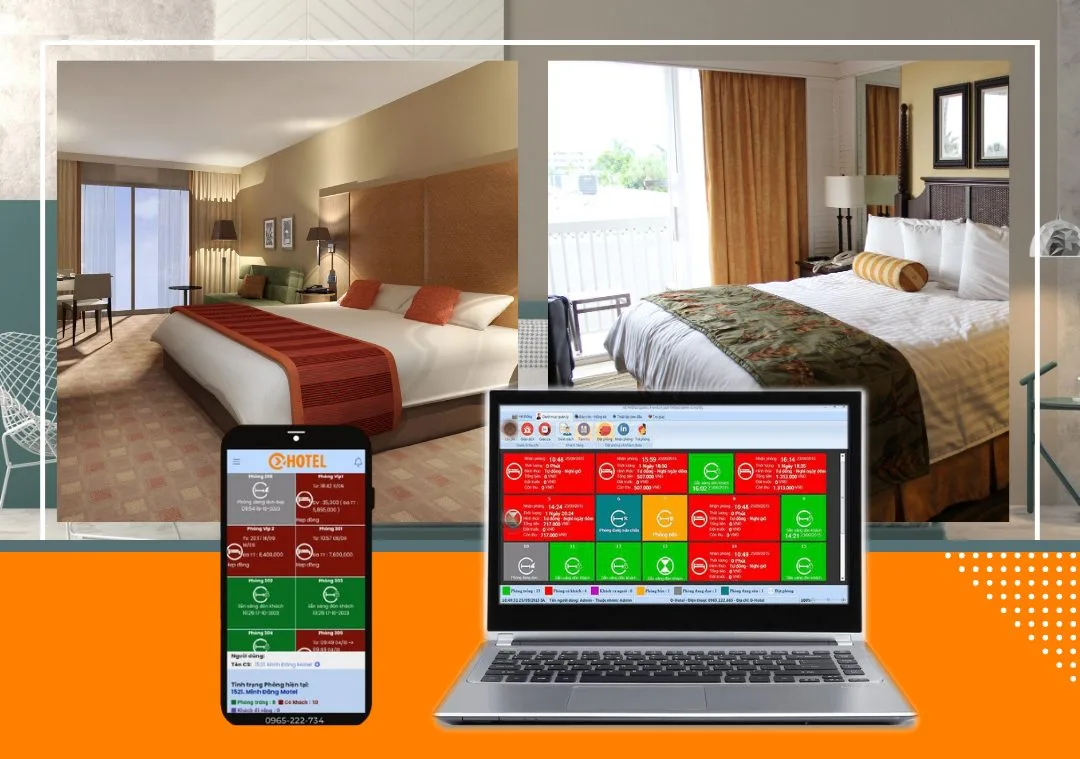
As the hotel business grows, competition is getting tougher, and most hotels have started thinking about adjusting their room rates. The secret is flexibility across different distribution channels depending on timing and each channel's ranking. Rate parity across room distribution channels is no longer widely applied – an opportunity for hotels to regain control of room rates in their game with distribution channels.
Common challenges in hotel management
Offering the lowest price on the hotel's own website is a sensible strategy for hotel managers to increase direct bookings. But when setting room rates, hotels must answer many questions: which channel brings the highest share of bookings? Which channel brings the highest net profit? Without good rate management, hotels will struggle to grow room revenue. Hotels face challenges in their game with OTAs and in solving the rate-setting puzzle. OTAs hold far more data about travellers than hotels do, so they take the initiative in analysing data and running campaigns.
When a hotel adjusts its rates, it is very hard to persuade OTAs to adjust their commission on room sales, because OTAs have their own rules and profit calculations. A hotel's campaign rarely changes those or affects their overall profit. OTAs can run promotions and discounts for guests booking on mobile devices, and hotels have little influence over these programmes. To offer the best price on its own website and increase direct bookings, a hotel needs consolidated rate information from many other distribution channels. OTAs may also have many affiliates, so consolidating this information isn't simple.
Guests have more tools to choose hotels
The growth of search tools has made guest needs more specialised in recent years, letting travellers easily compare hotel rates from many sources. Price competition is therefore becoming ever more “fierce”. Statistics show that in 2013 one third of travellers used search tools such as Trivago, Kayak or Google Hotel Finder to find hotels. Rates on online channels – hotel websites, social media, search engines and sites like TripAdvisor – will become ever more dynamic and competitive. Rates may change daily or even hourly, or follow popular pricing strategies such as “last minute” deals. OTAs have an advantage over hotels because they have a rich supply of rooms from many different hotels, combined with customer care programmes, giving them great power in the game with hotels.
How to reduce OTA influence and increase competitiveness
Hotels must be ready for a complex rate system that is flexible at every point in their overall pricing strategy. To do this, a hotel needs a management system with analysis and reporting capabilities that shows revenue fluctuations throughout the year, revenue by sales channel, profit margins, room yield and rates over time – enabling the right decisions.
What should rate adjustments be based on?
Hotels can also use statistics to restructure services across room types and set suitable rates. For example, a hotel has 2 room types: standard and VIP. Reports show that in the summer season from June to September, 70% of guests book standard rooms and 30% book VIP.
Of the 70% booking standard rooms, 20% regularly use extra services and could move up to VIP but are held back by price. The hotel can restructure its rooms into 3 types: standard rooms for 50% of guests, Deluxe rooms for 20% of guests with higher needs, and VIP rooms for the remaining 30% – and reset its rates accordingly.
Timing your strategy
Moreover, as revenue management increasingly puts the guest at the centre, rationalising profit per guest pushes hotels to exploit their marketing data and make the most logical pricing decisions.
Most importantly, hotels must pinpoint exactly when to run promotions and how to adjust rates between distribution channels, based on each channel's commission and ranking.
The game has begun, and the winner will be whoever makes the most of their advantages. For hotels, that means serving guests directly and using business data on revenue fluctuations, room yield and guest booking behaviour over time.