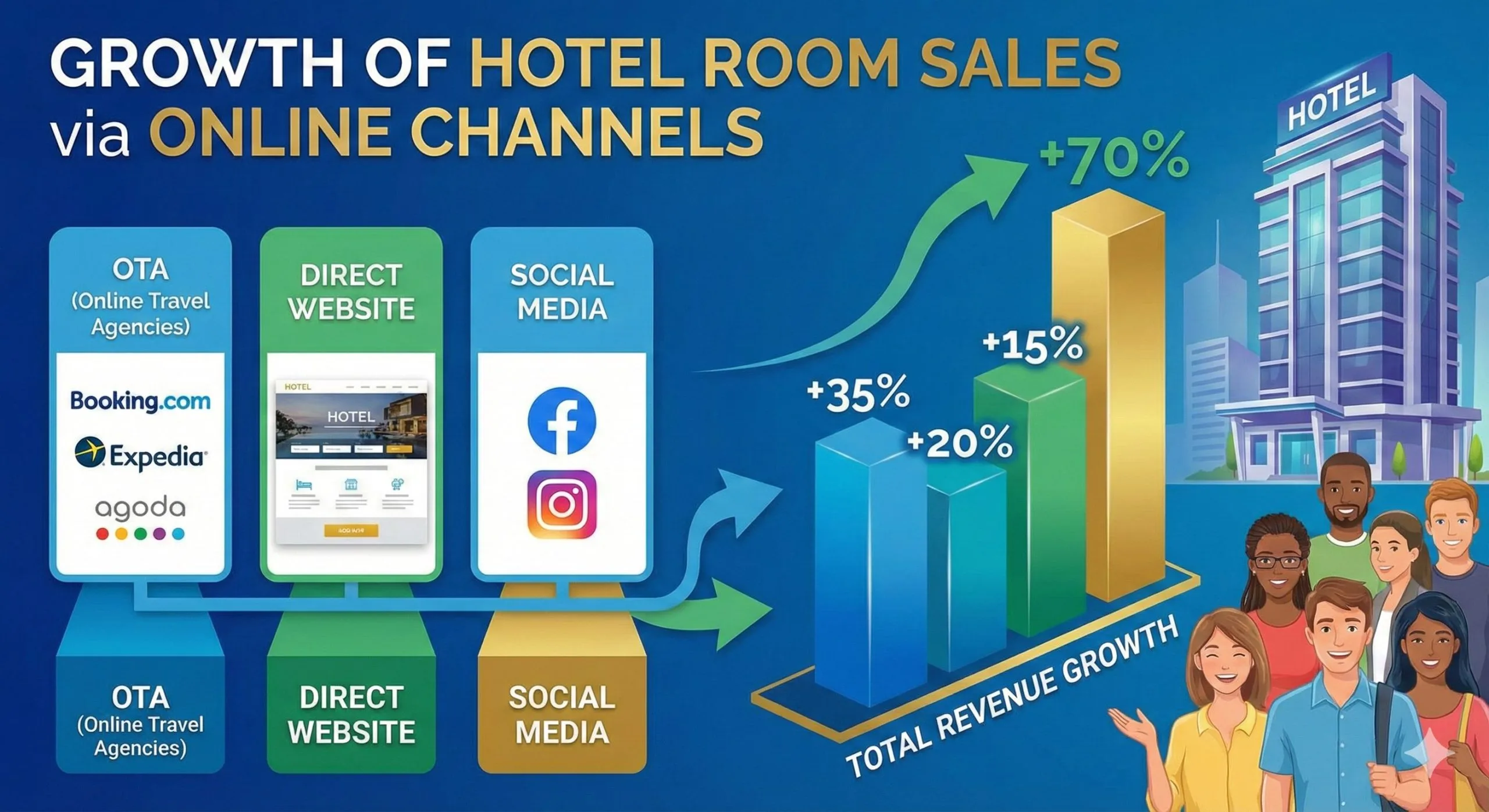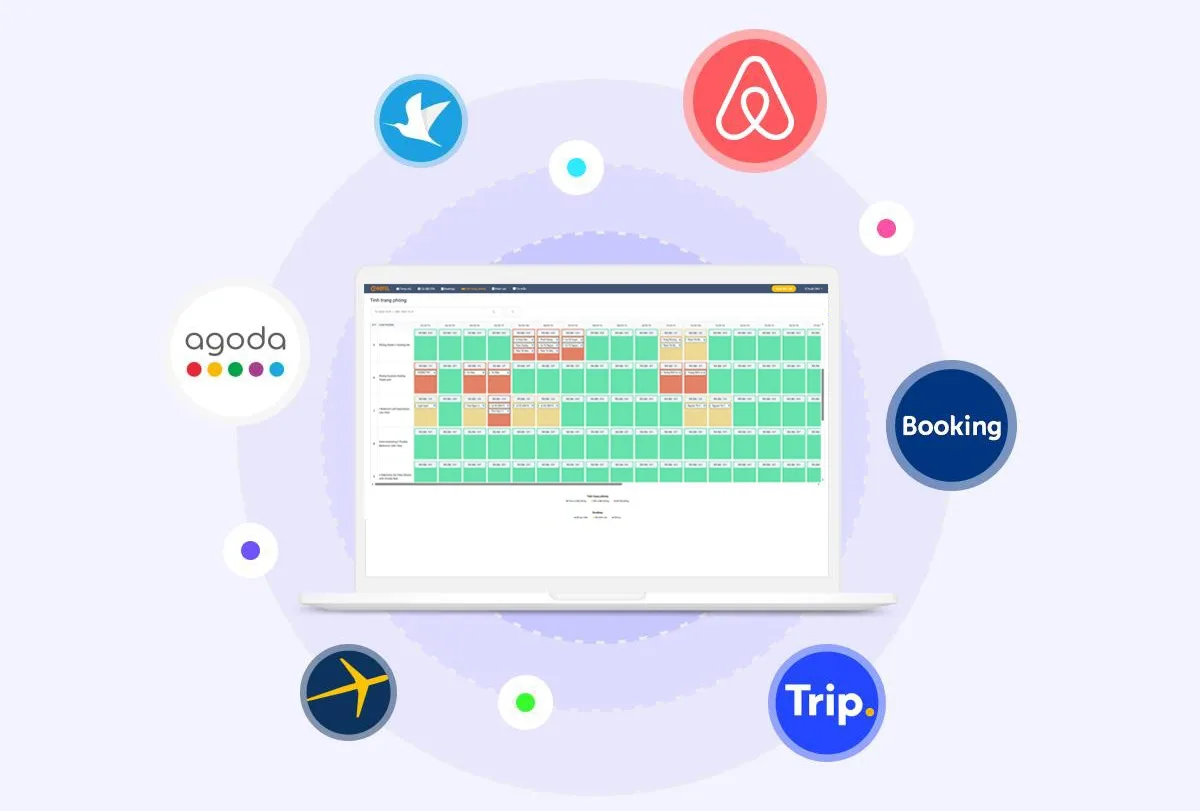
Online Travel Agencies
Online travel agencies (OTAs) have become a tool for travellers to book hotels for their trips. Although hotel marketing through OTAs feels relatively new to modern travellers, its roots go back decades before OTAs.
American Airlines launched automated reservation systems as early as 1946, and 30 years later, in 1976, United Airlines' travel agents got their own booking system. These were the first sparks of the ideas that led to the competition with OTAs discussed here.
Twenty years after that, in 1996, Microsoft launched the online booking site Expedia.com. In the following years came Travelocity.com, Priceline.com, Hotwire.com and Orbitz.com. Despite many mergers and acquisitions along the way, OTAs have clearly become major online assets.
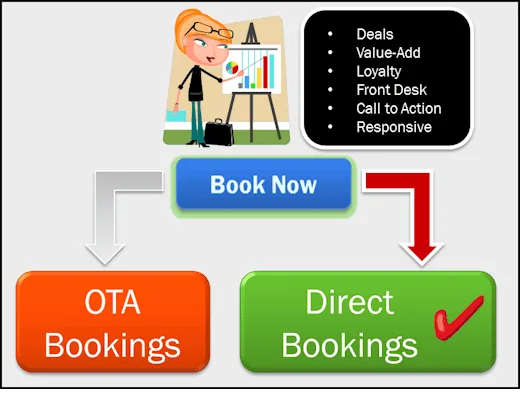
A big concern for hotel owners and marketers is how to make OTA bookings a smaller share than direct bookings. OHOTEL has compiled the solutions and tactics hotels and hotel marketers can use:
1. Content marketing (SEO)

Search engine optimisation (SEO) keeps evolving. Quality website content is the top factor in Google search results (“Content is King!”). Organic traffic can generate a lot of revenue for your hotel – at most hotels, it's the largest source.
One of the best ways to provide relevant, quality content is a blog, but blogs can be tedious. Hotel owners should look into effective tools such as professional website design, hiring content writers and asking guests to write reviews to grow their content.
2. Pay-per-click (PPC)
Many travellers search on Google and Bing. Alongside these, we also need to consider “metasearch”.
A hotel may or may not rank well on particular search engines, which is why PPC is a good idea. Another reason is that OTAs often bid on a hotel's brand name, so when users search for that hotel, OTA ads appear and lure them into booking through the OTA. It's important for properties to protect their brand in search engines.
3. Social media
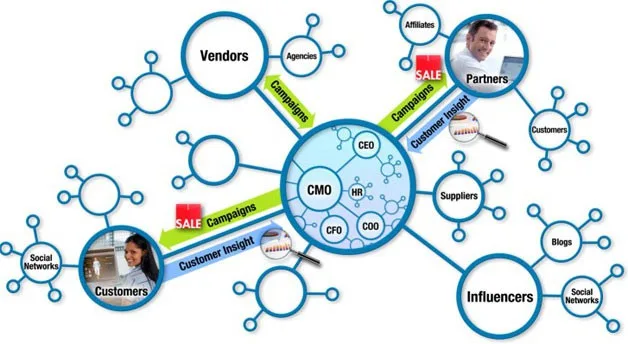
Social media, especially Facebook and Twitter, can be the best way to reach potential guests and change the balance between OTAs and hotel marketing. Although social channels don't contribute much direct revenue, they're great tools for creating awareness and initial interest. They're also excellent for interacting with guests before and after their stay, building loyalty along the way.
4. Mobile apps
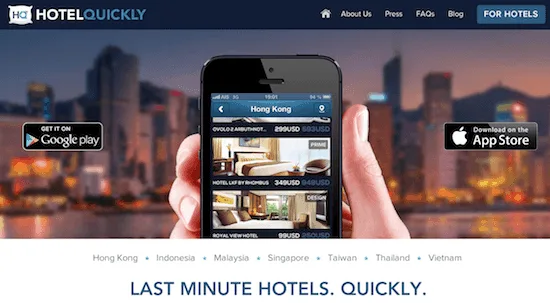
The world is at our fingertips and in our pockets thanks to mobile devices. Internet users see the world differently – it comes to them – and connected devices make life more convenient than desktops. Hotels should pay attention, because OTAs certainly have mobile apps, and more travel apps are coming.
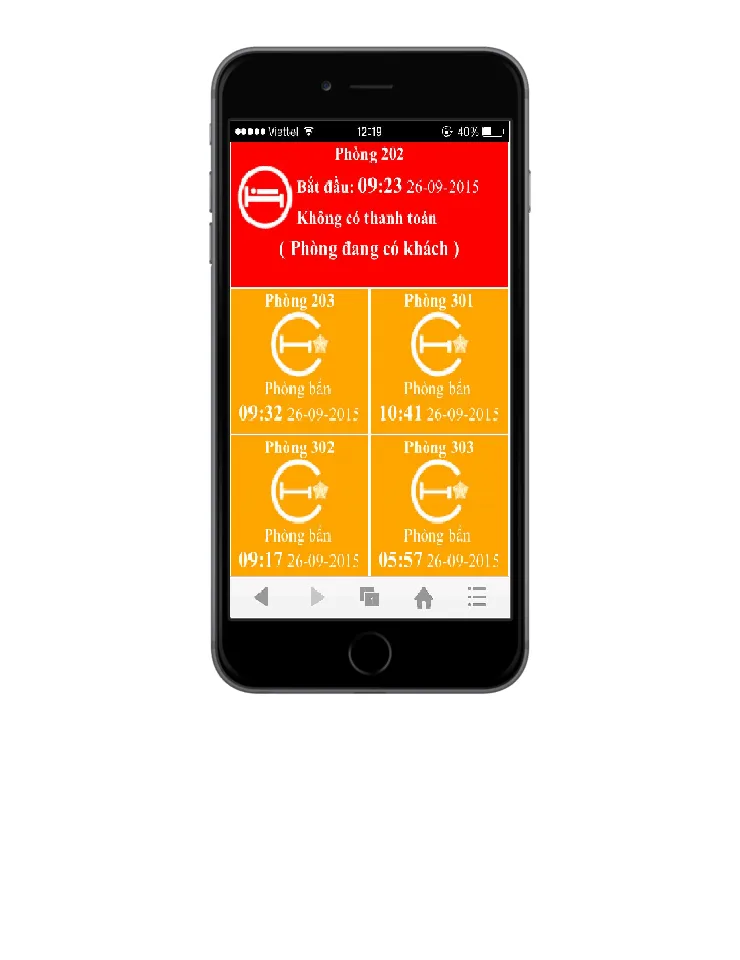
Hotels can benefit from this mobile revolution by investing in their own mobile app. There are many benefits, including connecting it directly to the hotel's property management system (PMS) to allow direct bookings. The app can also act as a guide before guests arrive – a great marketing piece.
5. TripAdvisor.com
TripAdvisor made its name as a popular review site. Metasearch differs from OTAs in that you can't book through TripAdvisor itself; it only shows you the options.
Essentially, TripAdvisor leverages its popularity as a review site to build business relationships with hotels that become its customers, and has become a search engine. This makes TripAdvisor an important channel for hotels to compete with OTAs. It offers many advertising options, including its business listings and TripConnect.
Conclusion
OTAs have truly created a wave of change in the travel industry. Hotels must adapt to OTAs' marketing tactics if they want to protect their own profits in this fierce competition.