Reservations staff don't just take booking requests – they must be true salespeople. They need training in persuading guests by presenting the hotel's rooms so guests book higher-priced rooms. Guests often book by phone, so telephone communication skills are very important for reservations staff.
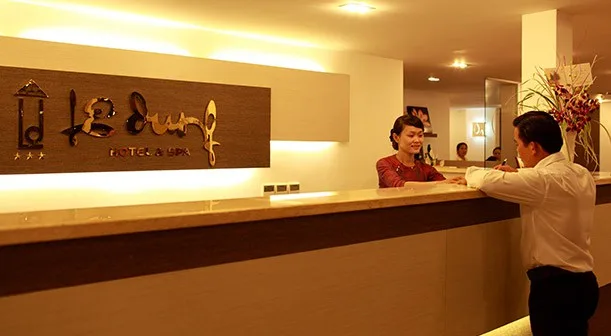
Points for reservations staff when taking a booking
- Always be gentle and friendly on the phone; smile before you pick up. - Always be polite and respectful, and remember to use the guest's name correctly. - Speak clearly and avoid slang or jargon that could confuse guests. - Encourage guests to book higher-priced rooms by describing the benefits and value of the room you want to sell. - Confirm the number of guests clearly. Note that in many cases the person booking isn't the person staying; ask them to spell the guest's name (for foreign guests). - Agree the room rate with the guest. - Record the name and phone number of the contact person.
Capture the guest's information
- Ask about the expected arrival time and transport (flight or train number…). This helps the hotel anticipate cancellations and know when to prepare for arrival. - Repeat all the details back to the guest to ensure accuracy. - End the call using the guest's name and thanking them for choosing the hotel.
RESERVATIONS
1. Overview
A reservation is an agreement between the guest and the hotel in which the hotel holds a room type, number of rooms and any special requests for the specific dates the guest requires during their stay.
2. The purpose of reservations
Advance reservations tell the hotel how many guests to expect at a future time, helping it plan ahead, guarantee rooms on arrival and maximise occupancy and room revenue. – A well-run reservations process lets the hotel prepare to welcome and satisfy guests and to assign and coordinate operations. Conversely, a poor reservations system reduces occupancy and revenue and can leave a bad impression on guests. – Hotels without computer systems use files and forms to take reservations, while computerised hotels mainly take reservations on the computer.
Whatever method is used, the reservations process includes:
– Receiving the booking request. – Checking availability. – Agreeing the booking with the guest. – Recording the booking details. – Sending a booking confirmation to the guest. – Filing the booking records.
II. Sources of reservations
1. Direct bookings with the hotel
Guests (individuals or groups) book directly with the hotel by: – Coming to the hotel in person. – Phone. – Letter, fax or email. – The internet.
2. Bookings through intermediaries
Guests book through intermediaries such as: – Travel agencies. – Tour operators. – Airlines. – Local tourist offices, foreign representative offices, embassies… With travel companies, hotels can use flexible room-selling arrangements:
• Allotment: the hotel reserves a set number of rooms for travel companies and airlines to sell to guests without advance booking requests. Once the room is sold, the company confirms the booking with the hotel.
Agent policies
If the agents don't sell all the rooms allotted to them within the agreed period, they don't have to pay anything. • Free sale: the hotel allows certain travel agencies, offices and centres to sell its rooms without quantity limits within a set period. The hotel can still change the arrangement or stop sales when needed.
3. Bookings through central reservation systems
Central reservation systems are usually set up between hotels in the same group, or between hotel groups, airlines and travel companies, to make booking easier for guests and encourage them to use hotels within the same system. The central system receives booking requests and allocates them to the hotels in its network. Guests are given toll-free numbers. Thanks to these systems, hotels attract guests and save on advertising. One of the most widespread worldwide is the GDS (Global Distribution System), used by many travellers and airlines.
III. Types of hotel reservations
1. Guaranteed reservations
A guaranteed reservation is an agreement under which the hotel must hold the room for the guest until check-out time on the day after the expected arrival date. If the guest doesn't use the room and doesn't cancel according to hotel policy, they must compensate the hotel. Guarantees are made through: – Prepayment of the room charge. – A deposit. – A credit card. – Travel agencies or companies with contracts with the hotel.
2. Non-guaranteed reservations
A non-guaranteed reservation means the hotel holds the room only until a set time on the expected arrival date, according to each hotel's policy (usually 18:00). After that, if the guest hasn't arrived, the hotel may sell the room to someone else.
Use Ohotel hotel management software to manage reservations and achieve the best revenue.