1. Why do hotels need a professional CCTV system?
Hotels welcome hundreds of people every day, handle cash at the front desk, and hold valuable assets in rooms, storerooms and car parks, with staff working in shifts. A single incident – a guest's lost belongings, a scratched car or a billing dispute – can hurt your reputation and your reviews on Booking, Agoda and Google Maps.
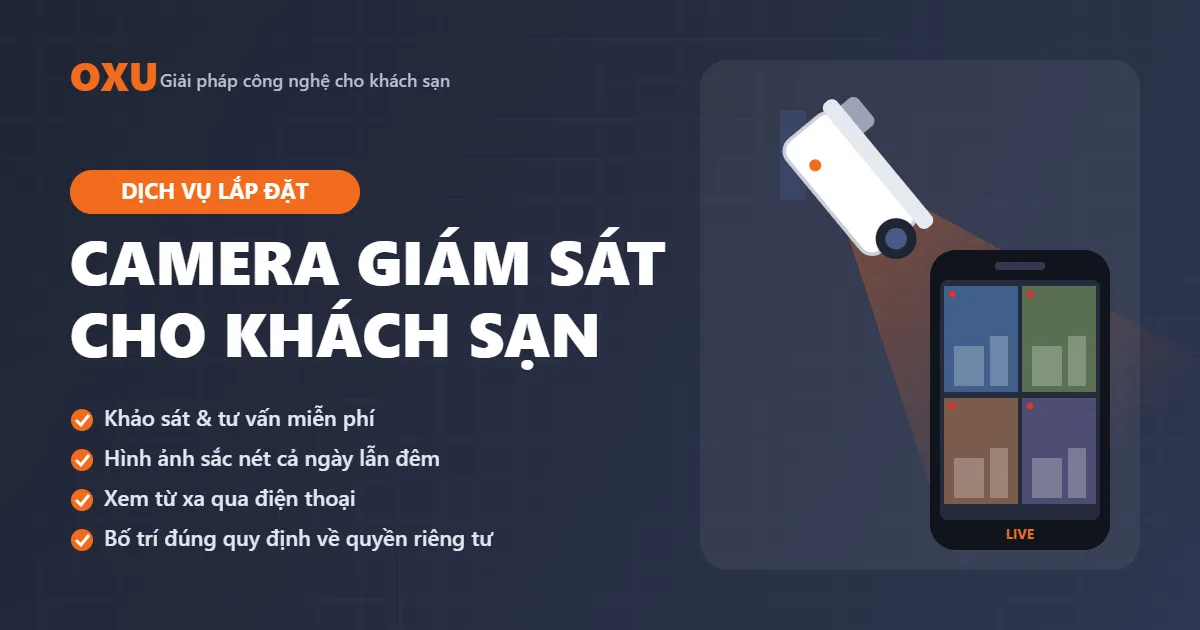
A well-designed hotel CCTV system helps owners:
- Deter theft, vandalism and disturbances.
- Keep clear video evidence when incidents or disputes occur.
- Monitor front desk, housekeeping and security operations to reduce fraud and losses.
- Watch the property remotely from a phone, even when managing several branches.
- Give guests a stronger sense of safety.
2. Where should cameras be installed in a hotel?
More cameras are not always better. What matters is the right positions, the right angles and respect for guest privacy.
2.1. Lobby and front desk
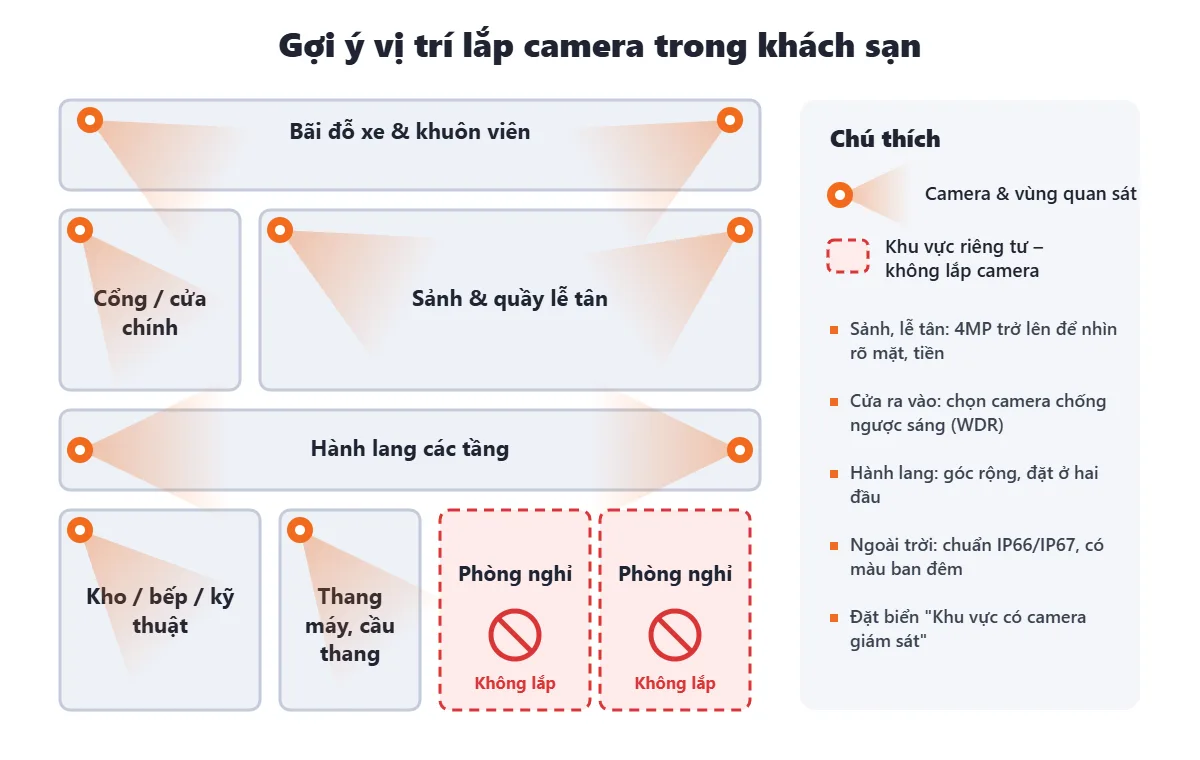
The most important area. Use at least one camera covering the whole lobby and one facing the front desk and cashier to record check-in, check-out, payments and key card handover.
2.2. Main entrance, gates and side doors
Entrance cameras should capture faces clearly. For backlit doorways, choose cameras with WDR (wide dynamic range).
2.3. Corridors, stairways and lifts
Corridor cameras show who entered which room and when – very useful when handling lost-item complaints. Wide-angle cameras at both ends of each corridor work best.
2.4. Car park and grounds
Outdoor cameras need IP66/IP67 weatherproofing and infrared or full-colour night vision to read vehicles and plates.
2.5. Storerooms, kitchen, restaurant and technical areas
These help control stock, minibar items and housekeeping supplies, and keep areas with electrical or gas equipment safe.
Important: Never install cameras inside guest rooms, bathrooms, toilets, changing rooms or staff private areas. This violates privacy, may be penalised under the law and can seriously damage the hotel's reputation.
3. CCTV and personal data protection rules
Camera footage is personal data of guests and staff. Vietnam's Personal Data Protection Law No. 91/2025/QH15 took effect on 1 January 2026 and sets stricter requirements for recording. Hotels should:
- Display "CCTV in operation" signs where cameras are installed.
- Use footage only for the security and operational purposes announced.
- Define clearly who can view live, play back and export footage.
- Use strong passwords and keep camera and recorder firmware updated.
- Set a reasonable retention period and delete footage when it expires.
- Inform staff about cameras in the workplace rules.
This information is for reference only. Hotel owners should seek legal advice to apply it correctly to their property.
4. What does a hotel CCTV system include?
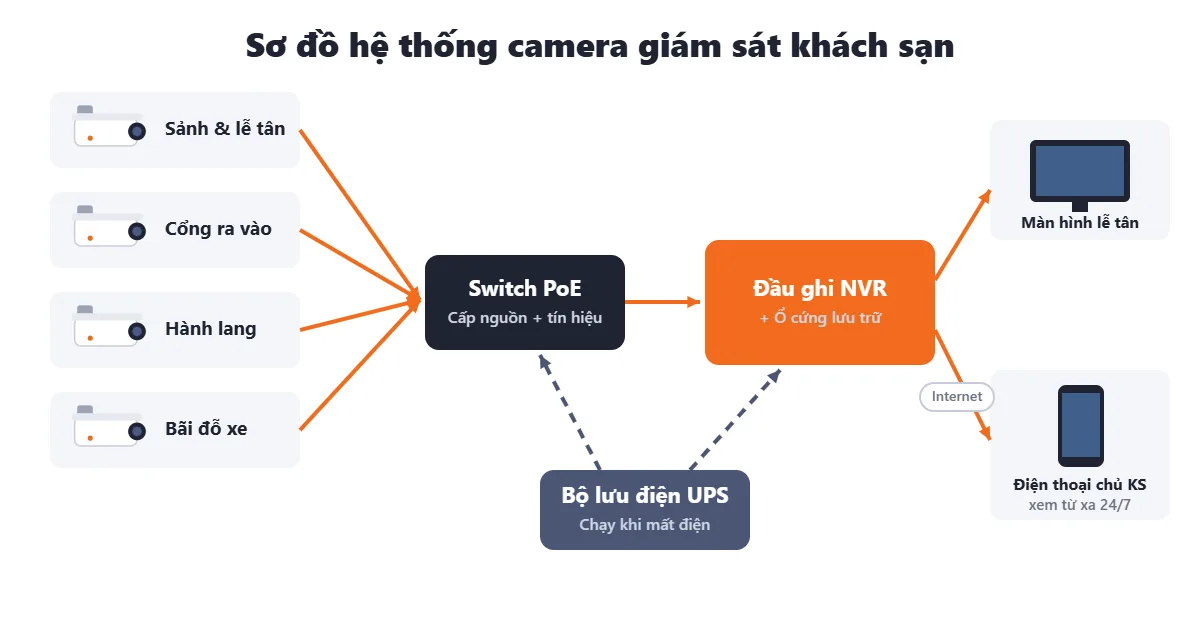
| Equipment | Role |
| IP cameras / HD analog cameras | Record each area. IP cameras offer higher quality and easier expansion; HD analog cameras cost less. |
| Recorder (NVR/DVR) | Stores, manages and plays back footage from all cameras. |
| Surveillance hard drives | Capacity depends on camera count, resolution and retention days. |
| PoE switch, cabling, power | Stable power and signal for every camera. |
| UPS | Keeps the system recording during power cuts. |
| Monitor and mobile app | Live view at the front desk and remote viewing by phone. |
5. How to choose the right cameras for a hotel
- Resolution: At least 2MP (Full HD); 4MP or higher for the lobby, cashier and gates.
- Night vision: Infrared or full-colour night vision for car parks and grounds.
- Weatherproofing: IP66/IP67 for outdoor cameras.
- Smart features: Motion and human detection, after-hours intrusion alerts, people counting.
- Retention: Typically 15–30 days depending on management needs.
- Brand and warranty: Genuine equipment with clear warranty and technical support.
- Aesthetics: Dome cameras for lobbies and corridors; bullet cameras outdoors.
6. Our professional installation process

- Requirements: Hotel size, floors, rooms, areas to cover and budget.
- Site survey: A technician visits to plan camera positions, viewing angles, cable routes and power.
- Proposal and quotation: Recommended cameras, recorder and storage, with an itemised quote.
- Installation: Neat concealed or conduit cabling with minimal disruption to guests and operations.
- Configuration: Recorder setup, multi-view screens, user permissions and mobile remote viewing for owners and managers.
- Handover and training: Front desk and managers learn how to play back and export footage.
- Warranty and maintenance: Regular checks of drives, lens cleaning and firmware updates.
7. What determines the cost?
- Number and types of cameras (indoor, outdoor, wide-angle, colour night vision...).
- Resolution and smart features.
- Desired retention period (which sets hard drive capacity).
- Installation complexity: number of floors, concealed or surface cabling, distances.
- Accessories: UPS, rack cabinet, monitors.
For an accurate quote, request an on-site survey rather than an off-the-shelf package that may not fit your property.
8. Common mistakes when installing hotel cameras
- Cheap cameras with blurry images that cannot identify faces.
- Backlit entrance cameras that only show silhouettes.
- Undersized hard drives that overwrite footage after a few days.
- No UPS, so recording stops during power cuts.
- Default passwords left unchanged, risking unauthorised access.
- Messy surface cabling that spoils the hotel's look.
- No maintenance, so broken cameras go unnoticed for months.
9. Combining CCTV with an integrated hotel management solution
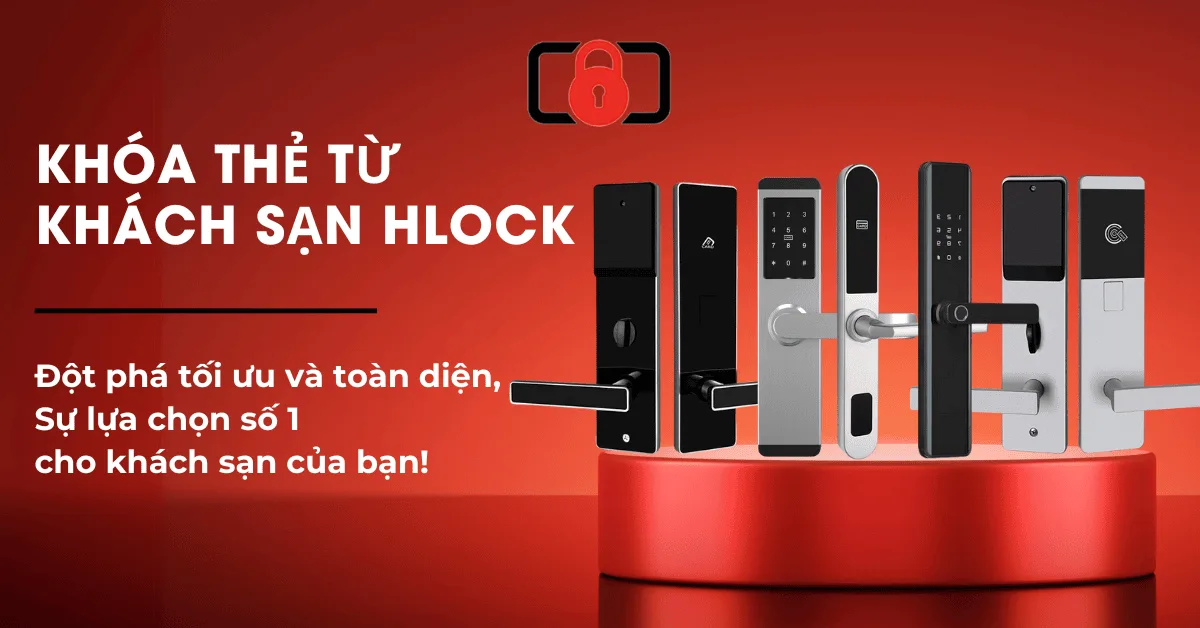
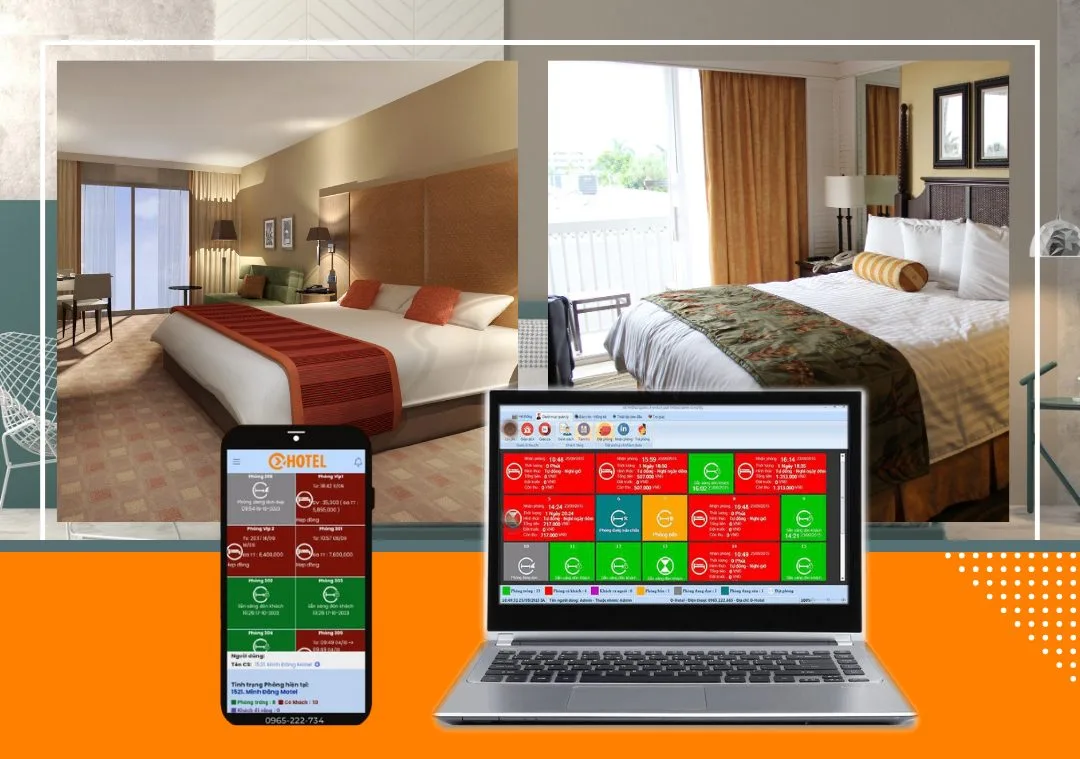
CCTV is most effective alongside transparent management. With OHOTEL hotel management software, HLOCK key card locks and QR payment displays, owners can match check-in/check-out history and payments with camera footage from the same moment, tightening revenue control and minimising losses.
10. Hotel CCTV installation service by OXU
With experience deploying technology for hotels, guesthouses and homestays nationwide, OXU offers a complete CCTV installation service:
✔ Free site survey and consultation based on your real needs
✔ Genuine equipment with sharp images day and night
✔ Neat installation without disrupting your business
✔ Remote viewing by phone with role-based access
✔ Camera placement advice that respects privacy rules
✔ Fast warranty, maintenance and technical support
11. Conclusion
A CCTV system is not just security equipment – it is a management tool that protects assets, reduces losses and makes guests feel safe. Getting it right from the start – the right equipment, the right positions, the right rules – saves repair costs and avoids risks later.
If you plan to install or upgrade CCTV for your hotel, contact OXU for a site survey and tailored advice.