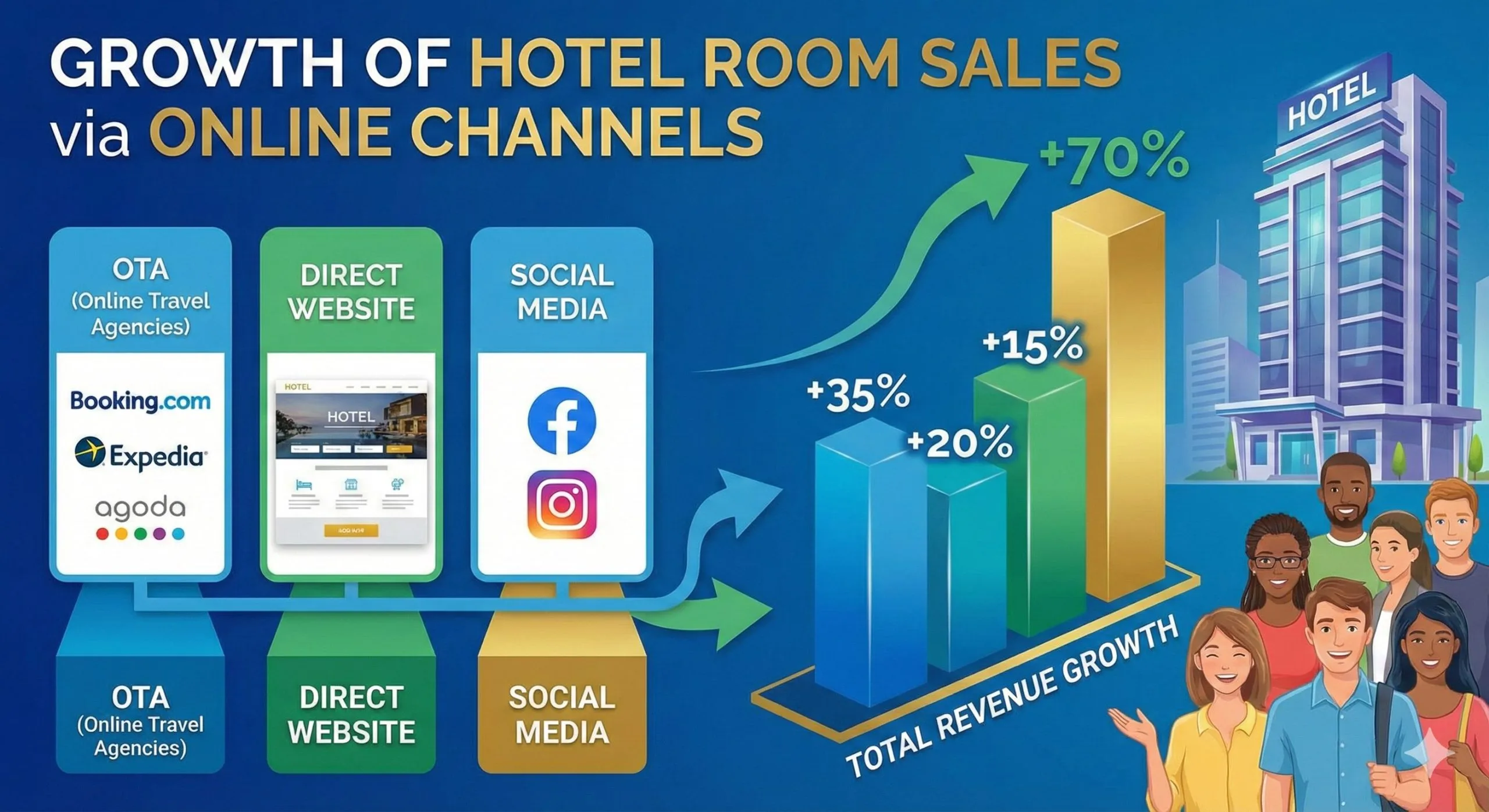
In the booming digital 4.0 era, technology and the sharing economy are becoming a strategic business trend, with Uber and Grab as prominent examples. Not only popular in Europe, this trend is also gradually being adopted in Vietnam's hospitality industry. So do you know what Airbnb is, and why people say Vietnam's room providers should be wary? Let's find out in this article.
What is Airbnb?
Airbnb stands for AirBed and Breakfast. It is a startup that connects people looking for a place to stay with people who have rooms to rent all over the world through a mobile app. If Uber is a ride service, Airbnb is a true home-stay service. Payment is made through Airbnb by credit card, and the platform takes a fee from both the guest and the host.
Although Airbnb is not yet very widespread in Vietnam, its customers find it more convenient than traditional room services.
How does Airbnb work?
Put simply, Airbnb works much like Uber. Airbnb acts as the intermediary and charges a fee for connecting hosts with travellers.
If you have a spare room, an apartment or a resort villa, you can become a Host by registering an Airbnb account, listing your property on the website and renting it out to guests.
Travellers search for places that suit them and book them. All payments are made through Airbnb, and you can earn money from rooms and apartments you are not using.
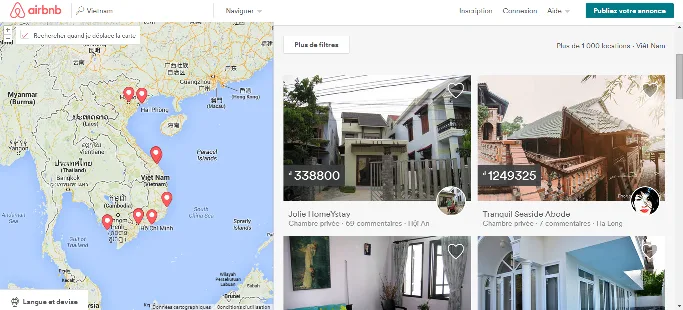
The host fee is currently listed at 3% of the total booking value, while the guest fee is 6–12%. At first glance these fees seem high, but in practice guests often spend much less than when booking a hotel through traditional OTA channels.
Once your booking is confirmed, Airbnb charges your card and pays the host after you check in.
Cheap villas and money-saving shared rooms for backpackers
In Vietnam, quite a few wealthy families own villas. They often stay there for only a few weeks during holidays or at weekends; for most of the year the villas sit empty or are occasionally rented out short-term.
Since Airbnb appeared and became popular in Vietnam, the number of villas listed on it has grown rapidly.
If your budget allows, you can rent villas inside 5-star resorts at much better prices than on Agoda or Mytour.
And if you are a backpacker who wants to save money and experience local life, a shared room on Airbnb is a safe place to sleep for the lowest possible cost.
Why should Vietnam's room providers be wary?
With many advantages over traditional booking – lower prices with good service quality – Airbnb is increasingly chosen over hotels.
The number of hosts renting out accommodation through Airbnb is growing strongly, and so is the number of guests. This worries hotel businesses, who have asked for management measures to ensure fairness for traditional hotel operators.
Many tourism experts believe that before long, Airbnb hosts will become major competitors to traditional hotels, especially small and medium-sized ones.
What do experts say about this service?
Mr. Nguyen Anh Duc, a hotel industry expert, shared: “Room-sharing services are growing very fast and are hard to hold back. Many 1–3 star hotels are already being affected.”
He also supports managing room-sharing services, but not by banning them. Local hosts should be allowed to enrich travellers' experiences, while still meeting safety, security and hygiene requirements and paying taxes like traditional hotels.
There is still much debate for and against. But it cannot be denied that Airbnb is creating a new wave of technology in the hotel and tourism industry, and it will become a major rival to domestic booking sites because far more international travellers use it.
To compete, hotels need to connect to every sales channel and manage rooms efficiently – a channel manager and hotel management software such as Ohotel makes this much easier.