1. Why housekeeping is make-or-break in peak season
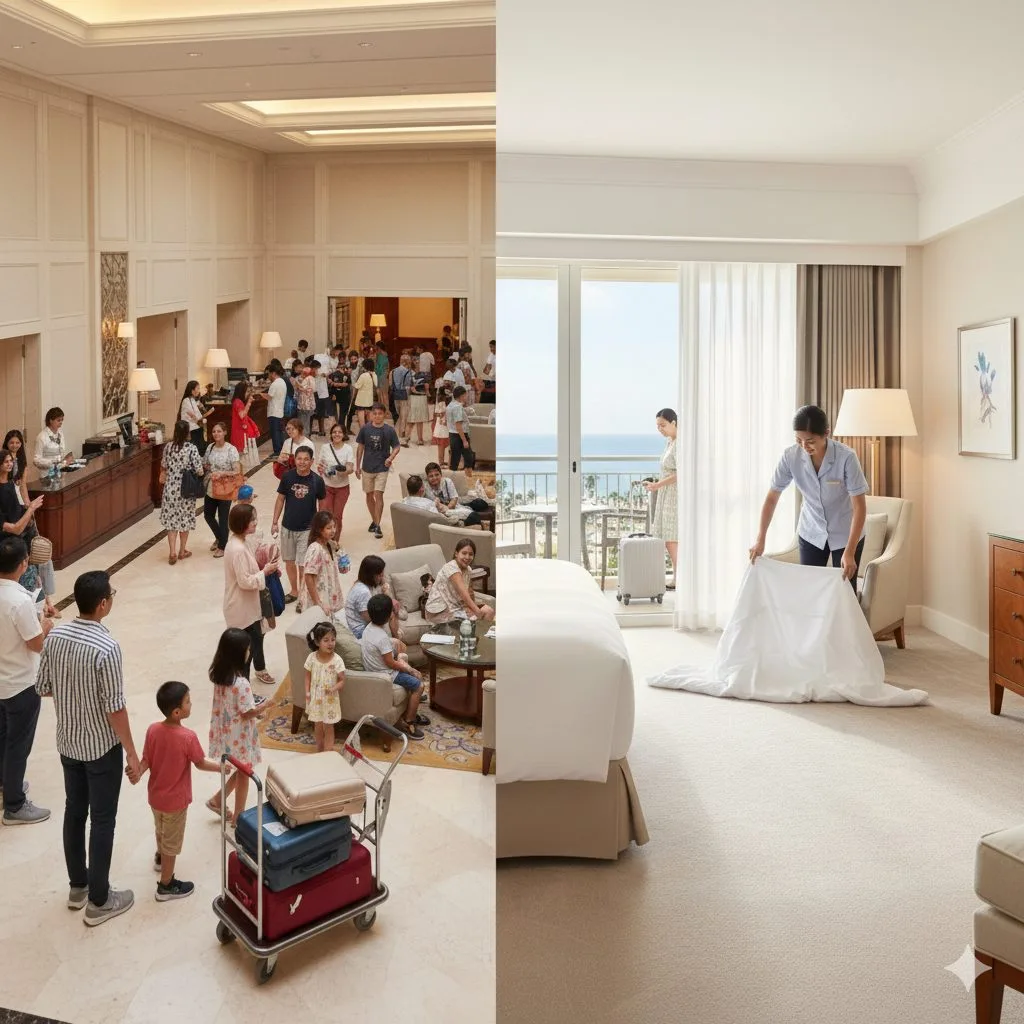
Housekeeping determines the quality of a guest's stay and directly affects OTA reviews and repeat visits. In peak season – public holidays, Tet, travel season and long weekends – pressure multiplies:
- Occupancy can reach 90–100%
- Check-outs and check-ins happen non-stop
- Staff are overloaded
- Dirty rooms, late room releases and missed minibar checks become common
Many small and mid-sized hotels suffer badly: slow check-in frustrates guests, poorly cleaned rooms lead to bad OTA reviews, service errors cause revenue loss and stressed staff become less productive.
So how do you run housekeeping effectively during the busiest time of the year? This article covers processes, staffing, technology and practical tips for every type of hotel.
2. The biggest housekeeping challenges in peak season
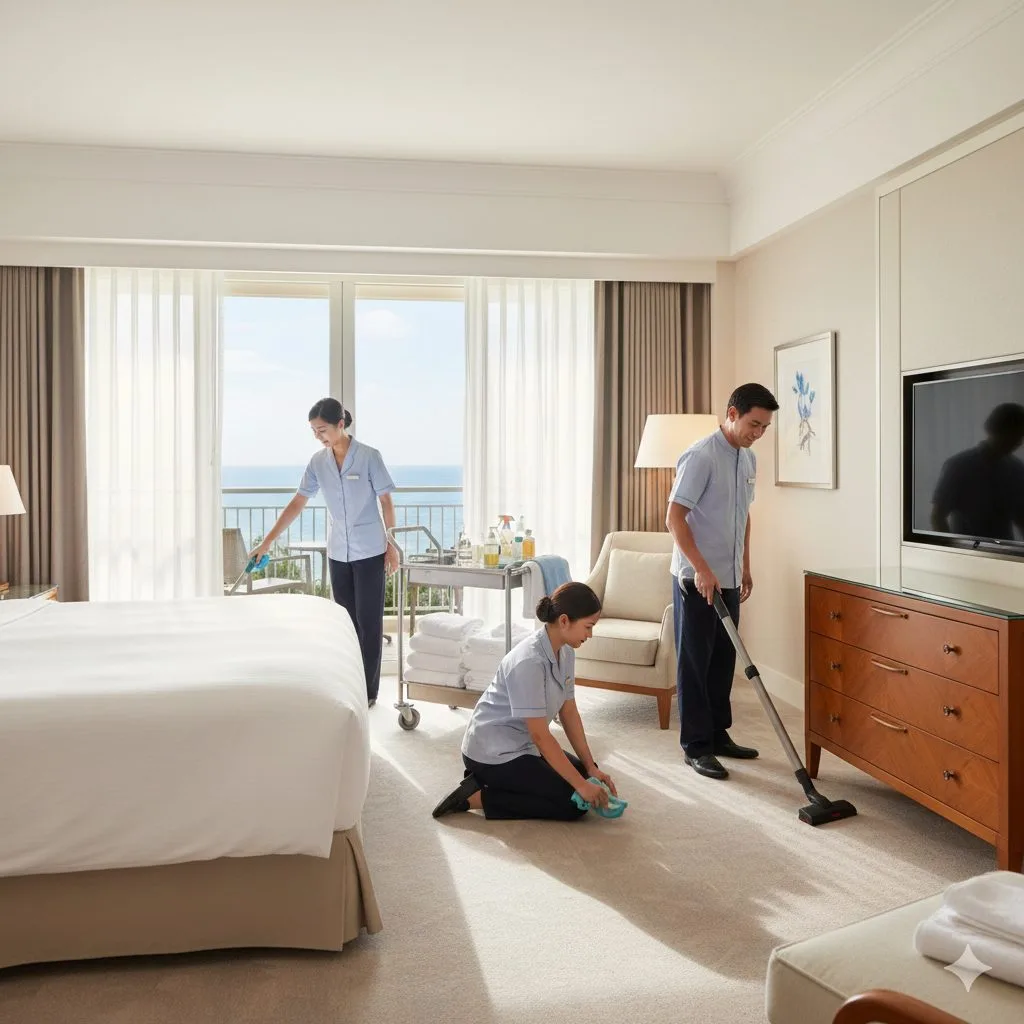
2.1 A sudden surge in workload
More rooms to clean, constantly changing guests and more service requests. Without a plan, staff are exhausted on day one.
2.2 Staff shortages or inexperienced seasonal workers
New staff who don't know the process take longer per room, delaying check-ins.
2.3 Poor communication between front desk and housekeeping
Reception doesn't report check-outs, housekeeping doesn't mark rooms clean, or rooms under repair are still sold – leading to chaos.
2.4 In-room service errors
Forgetting water, towels or amenities, not checking the minibar or not reporting broken equipment – small mistakes with big consequences.
2.5 Difficulty controlling quality in every room
When staff race against the clock, quality drops.
3. A standard process for effective housekeeping
3.1 Standardise cleaning checklists
Checklists are the backbone of housekeeping:
- Stay-over rooms: change towels, remove rubbish, restock amenities, check equipment, vacuum and mop
- Check-out rooms: change all towels, sheets and duvets, check the minibar, check for lost items, deodorise and report damage immediately
- VIP rooms: extra decoration, more thorough checks of lights and air conditioning, welcome gifts (depending on the hotel)
Checklists help staff do it right and help managers keep control.
3.2 Zone rooms sensibly
Assigning floors or areas reduces walking, prevents missed rooms and makes progress easy to track. For example: floor 1 → one housekeeper; floor 2 → two housekeepers; floors 3–4 → one supervisor and two housekeepers.
3.3 Hold a 10-minute housekeeping briefing every morning
Cover rooms checking out, VIP guests, rooms under repair and special notes from reception so everyone starts the day with the same information.
3.4 Apply time standards per room
Many 2–4 star hotels use about 10 minutes for stay-over rooms and 15–20 minutes for check-out rooms. Supervisors should monitor progress.
3.5 Train seasonal staff
A one-day training programme should cover fast cleaning, standard bed-making, checklists, guest communication, chemical use and workplace safety.
4. Optimising housekeeping with technology
Hotel management software such as OHOTEL can make housekeeping more than 50% more efficient.
4.1 Real-time room status
Reception and housekeeping both see dirty, in-progress, clean, maintenance and VIP rooms – no more assigning rooms that aren't ready.
4.2 Assign rooms directly in the software
Supervisors receive the list of rooms to clean, assign each room to a housekeeper and track individual progress – very effective in peak season.
4.3 Instant maintenance reports
A blown bulb, weak air conditioning, a faulty TV or a lock problem can be reported to maintenance with one tap.
4.4 Minibar and service control
The software records minibar consumption per room and charges it automatically at check-out, preventing losses when staff forget to report.
4.5 Housekeeping log per room
Who cleaned the room, when, how long it took, whether the checklist was completed and any damage reported.
5. 10 tips for smooth housekeeping in peak season
- Prepare supplies 1–2 weeks ahead: spare linen, towels and pillows, cleaning chemicals, vacuum cleaners, squeegees and amenity kits.
- Keep buffer rooms: reserve 2–3 clean rooms per floor for early or VIP check-ins.
- Clean in priority order: check-out rooms, then VIP rooms, then stay-overs.
- Avoid cleaning stay-overs at peak check-out times.
- Use the four-corner bed-making technique, which can save up to 40% of time per room.
- Colour-tag trolleys: yellow for dirty rooms, green for clean rooms, black for maintenance.
- Use walkie-talkies or an internal app for fast communication.
- Create a damage identification guide so staff know what to report immediately.
- Run cleaning competitions with rewards to keep morale high.
- Ensure proper rest – rotate shifts or add staff to avoid burnout.
6. Room quality control
To make sure every room meets the standard, managers should randomly inspect 10–20% of rooms daily, use a dedicated inspection checklist, record errors for retraining and track cleaning time per room. Good quality control means fewer bad OTA reviews.
7. Reducing bad reviews in peak season
Most 1–2 star reviews in peak season come from dirty rooms, rooms not ready, unfriendly staff, broken equipment and damp or smoke smells. Build a deodorising process, check equipment before peak season, stock enough towels and amenities, and train staff in basic communication. Fixing these five points can reduce negative reviews by around 70%.
8. A housekeeping staff scoring system
Score staff on cleaning speed (average time per room), complaint rate for their rooms, minibar reporting accuracy, teamwork and attitude. When everything is measured, people improve.
9. Conclusion
To run housekeeping smoothly in peak season, hotels need clear processes, detailed checklists, trained staff, enough supplies, software automation, strict quality control and good communication between departments. The result: less pressure on staff, more efficient operations, fewer bad reviews and more repeat guests and revenue.