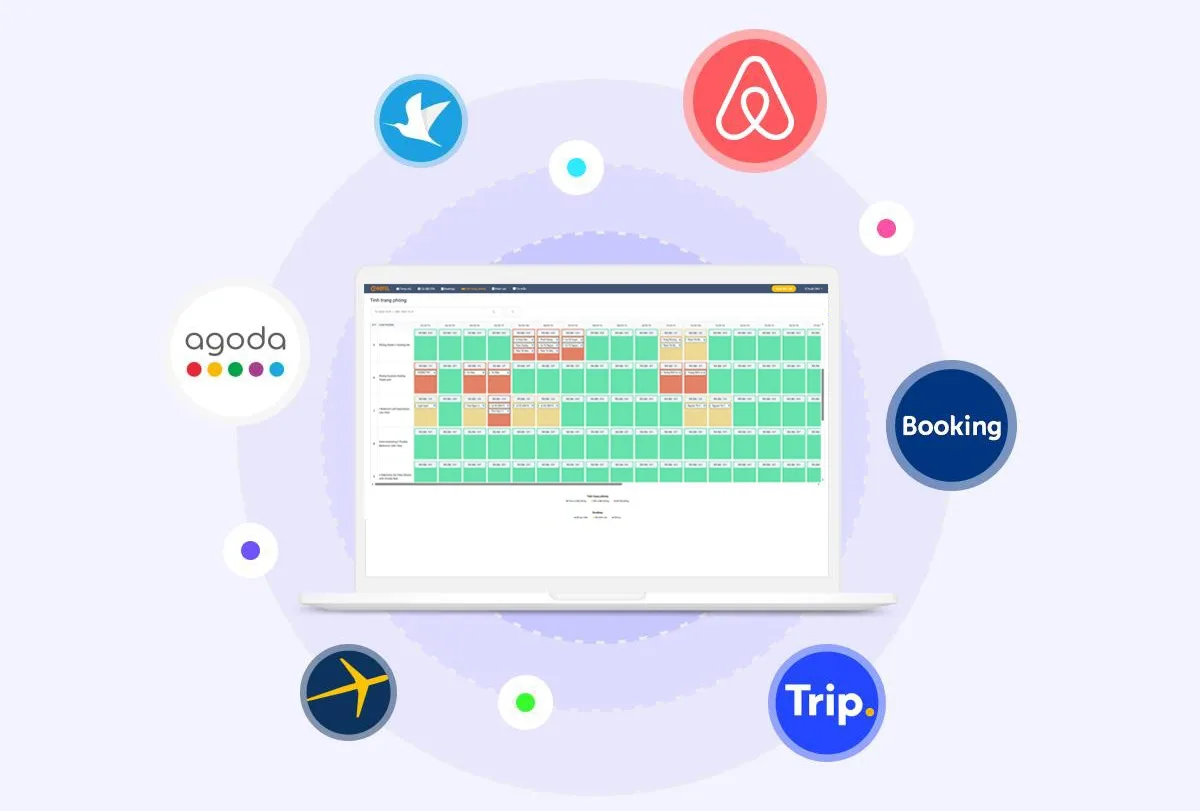
Today almost every hotel sells rooms on several channels: Booking.com, Agoda, Traveloka, Expedia, the hotel website and more. But the way these channels are managed varies widely. The two most common approaches are:
- Managing sales channels manually
- Managing sales channels with a Channel Manager
So how do they differ, and which is the best choice for hotels in 2026?
What is manual channel management?
Manual channel management means staff log in to each OTA, update rates and availability by hand, and record bookings in a notebook, Excel or separate software. In practice:
- A booking arrives → rooms are deducted manually on the other OTAs
- Prices change → each channel is edited one by one
- Reports → compiled in Excel
This approach is common in small hotels, properties with few rooms or those just starting to sell on OTAs.
What is a Channel Manager?
A Channel Manager:
- Synchronises rates and availability to all OTAs
- Updates automatically when a booking arrives
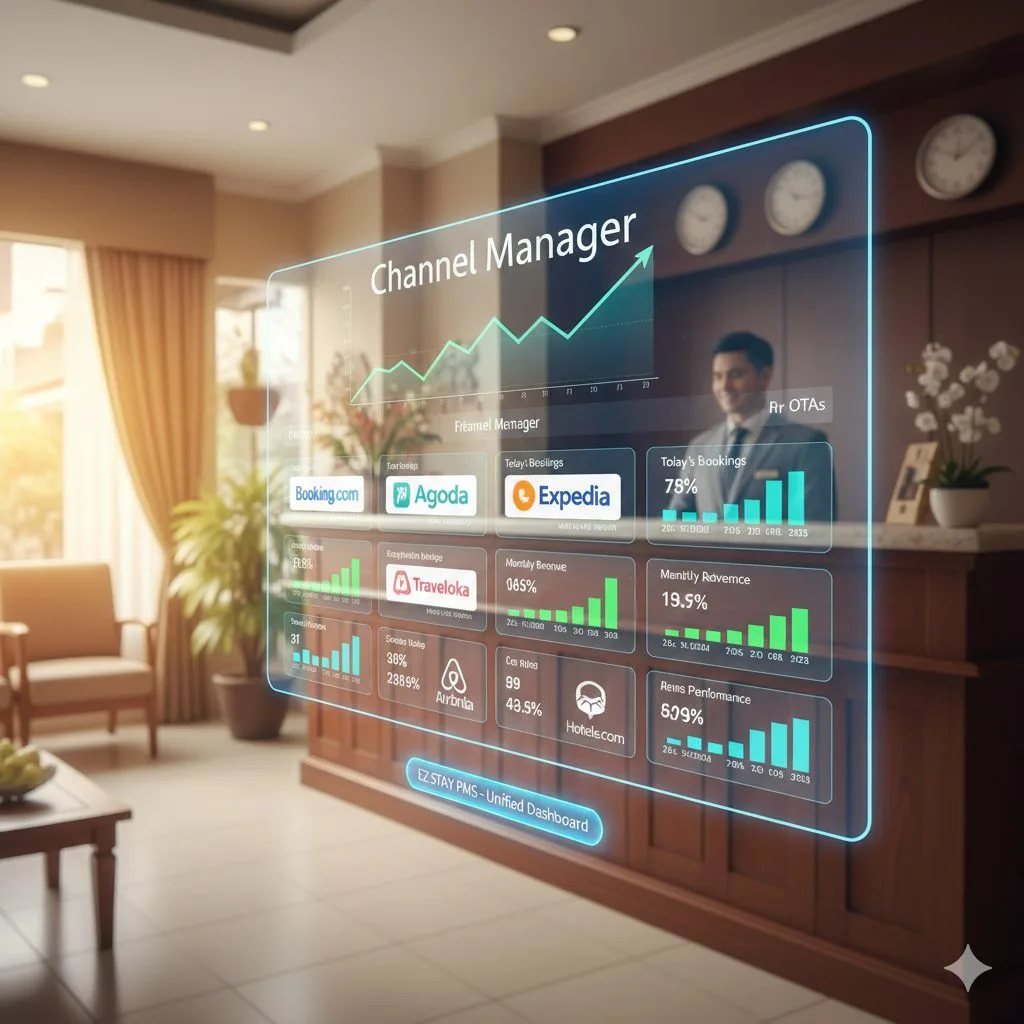
- Manages multi-channel bookings on a single screen
Combined with hotel management software (PMS), it creates an automatic, accurate and transparent sales system.
Manual management vs Channel Manager
1. Data management
| Criteria | Manual | Channel Manager |
| Rate and availability data | Managed on each channel separately | Centralised in one interface |
| Updates | Manual data entry | Automatic |
| Accuracy | Low, depends on data entry | Near-perfect |
A Channel Manager is far superior in accuracy and data synchronisation.
2. Overbooking risk
Manual: rooms are easily forgotten, double bookings happen and OTAs rate your reliability lower.
Channel Manager: a booking automatically deducts the room everywhere, reducing overbooking to almost zero.
3. Time and staff
| Criteria | Manual | Channel Manager |
| Updating rooms and rates | Entered on each channel, time-consuming | Entered once in one interface |
| Dependence on staff | High | Low |
| Booking handling | Slow | Fast, real-time |
Manual management takes a lot of time for little result.
4. Sales performance
Manual: inconsistent prices, lower OTA visibility and more empty rooms.
Channel Manager: stable prices, accurate availability, better OTA ranking and higher occupancy.
Selling well is not about the number of channels but how you manage them.
5. Reporting and revenue control
Manual: slow reports, frequent errors and little remote control for the owner.
Channel Manager with PMS: real-time reports, transparent revenue and management from anywhere.
Why do hotels on many channels still have empty rooms?
- Inefficient manual management
- Rates and availability not synchronised
- Slow responses
- No data to optimise strategy
A Channel Manager solves all of these problems.
When should a hotel switch to a Channel Manager?
Use a Channel Manager now if you:
- Sell on two or more OTAs
- Often get wrong prices or run out of rooms
- Cannot monitor operations every day
- Want to increase occupancy and revenue
The more channels you sell on, the less you can manage manually.
Channel management trends in 2026
- Centralised management
- Automated room sales
- Integrated Channel Manager + PMS
- Less dependence on staff
Manual channel management will gradually disappear.
Conclusion: a Channel Manager is the inevitable choice
Manual management: time-consuming, risky and hard to scale.
Channel Manager: accurate, automatic and revenue-optimising.
If your hotel wants fewer empty rooms, more effective sales and professional, sustainable management, a Channel Manager is essential. Learn more about the OXU CMS channel manager and OHOTEL.
Contact us for advice
OXU Vietnam Co., Ltd.
- Head office: Yen Phong New Urban Area, Yen Phong, Bac Ninh
- Hanoi branch: 6th floor, 29 Le Dai Hanh, Hai Ba Trung, Hanoi
- Ho Chi Minh City branch: 1C Lot 5, Ba Diem Residential Area, Hoc Mon, HCMC
- Hotline: 0965.222.302
- Email: Contact@oxu.vn