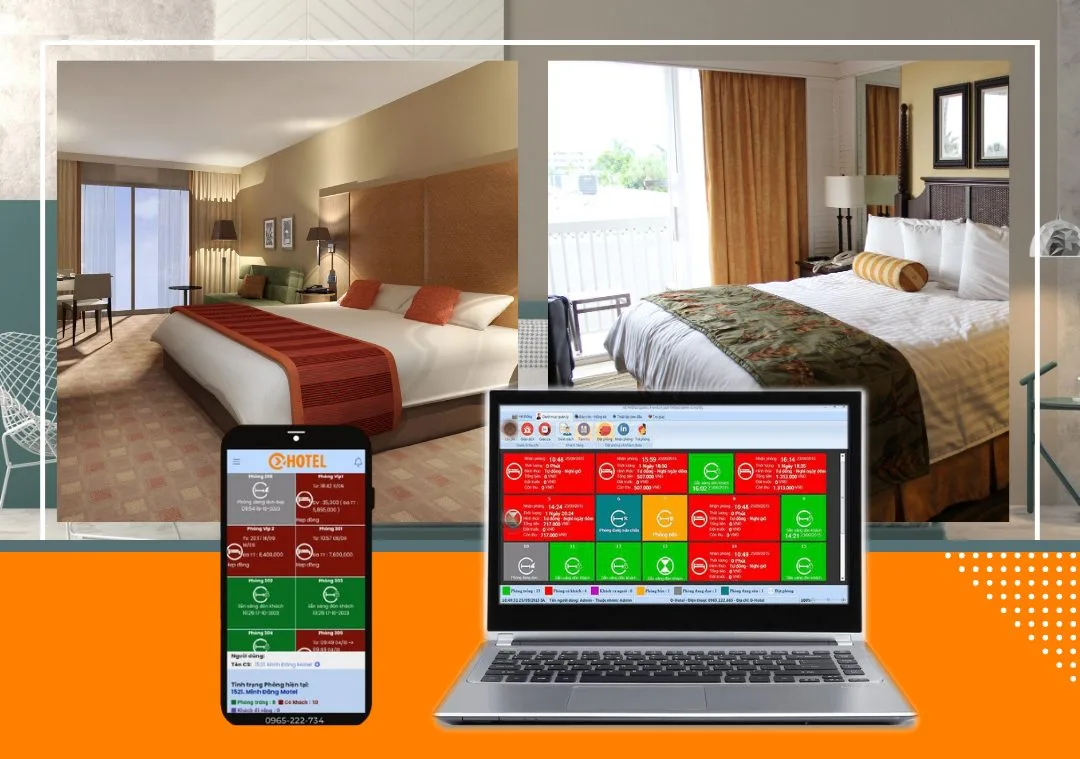
Many small hotels are always busy, yet their actual revenue is lower than expected. Plenty of owners say: "Our rooms are always full, but where's the money?" What causes this, and how can you stop revenue leakage for good? This article analyses five causes of revenue loss and a complete solution to help small hotels optimise profit.
1. Manual management: mistakes, confusion and no transparency
Most small hotels still rely on notebooks, Excel, memory and Zalo or Messenger for bookings.

This leads to wrong room rates, wrong check-in/check-out times, forgotten availability updates, cash losses from careless counting and uncontrolled extras such as minibar, laundry and motorbike rental. This is the most common cause, accounting for 40–60% of total losses.
Solution: use hotel management software to calculate charges automatically, log every transaction, control every extra and minimise human error.
2. Uncontrolled extras and services
Small charges such as bottled water, snacks, laundry, vehicle rental and third-guest surcharges can cost hundreds of thousands to millions of dong a day if not recorded transparently. Some reception or housekeeping staff forget – or deliberately fail – to record them.
Solution: automate surcharges in the software, check minibar and services against a checklist and make sure the software records who added, deleted or edited each item.
3. No OTA synchronisation → double bookings → lost guests and money
Small hotels often forget to close rooms on Booking.com, Agoda and other channels, or don't update rooms when walk-in guests arrive, leading to overbooking. The consequences: moving guests elsewhere, losing reputation and ratings, paying compensation and losing repeat guests.
Solution: use software with a Channel Manager, sync rooms in real time and close sales on all OTAs automatically when full.
4. No control over cash collected by staff
In small hotels, receptionists often collect payments, assign rooms, calculate extras and close shifts. Without clear oversight, they may record lower revenue than reality, give unauthorised discounts, mark guests as checked out without handing in the money, or delete and edit bills to pocket cash.
Solution: give every staff member their own account, log 100% of actions, produce clear shift reports and show revenue in real time on the owner's phone.
5. Not pricing correctly by season and day
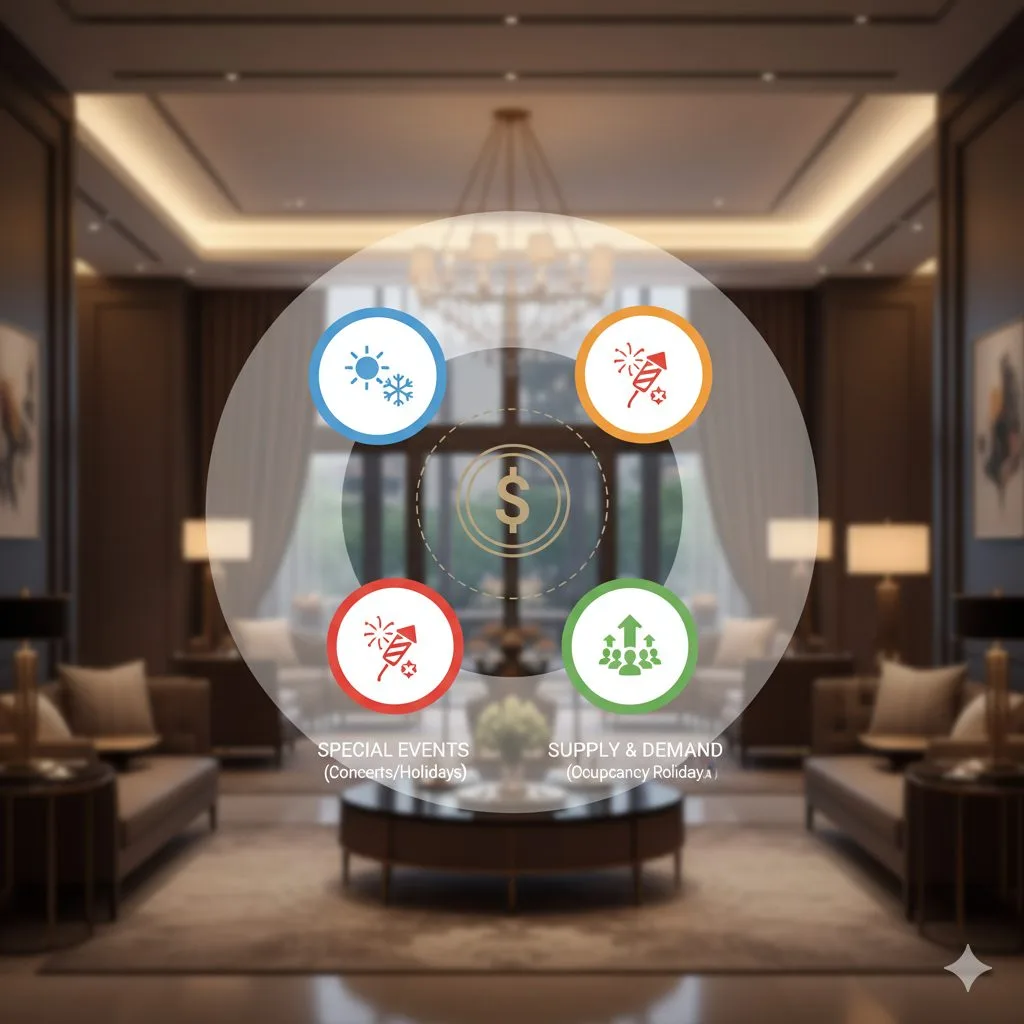
Small hotels often keep one fixed price all year – selling too cheaply on holidays and too expensively in low season, losing guests to competitors. The lack of a pricing strategy causes indirect but very large losses.
Solution: apply dynamic pricing based on season, day of the week, available rooms, local events and competitors' OTA prices.
The complete solution: digitise operations with hotel software
A modern hotel management system (PMS) helps you:
- Stop leakage: automatic billing, edit logs and staff monitoring
- Sync OTAs to avoid double bookings: Booking.com, Agoda, Traveloka and Airbnb rates and rooms update automatically
- Increase operational efficiency by 30–50%: fast check-in, real-time revenue reports and remote management by phone
- Standardise processes and reduce errors: easy for new staff, no manual records
- Improve the guest experience: fewer mix-ups, faster and more accurate service
Conclusion
Small hotels don't lose revenue because they have few guests – they lose it through loose processes, manual management and a lack of technology. To operate well and increase profit sustainably, standardise processes, synchronise OTAs, automate billing and use modern management software. That is the key to running a transparent, efficient small hotel with no leakage.
Learn about OHOTEL, the hotel management system that stops revenue leakage.